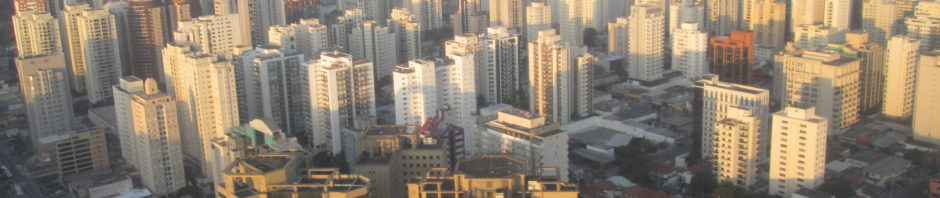
The escape from Lima starts in the psychotic inner streets where buses and taxi drivers in queues of motionless cars sound their horns of anger and lament whilst street vendors thread between the vehicles offering cold drinks, sunglasses and childrens’ toys. At the first traffic lights, a Venezuelan juggles knives whilst balancing on a board on a basketball, whilst at the next a man in Spiderman costume performs handstands and flips, and as the light turns green the drivers sound their horns and race ahead, cutting across lanes and surging forward to the next impasse. If they can not gain advantage for themselves, they can at least destroy the opportunities of others. Five hundred years of national self-harming played out as live theatre on the highways every day.
Finally leaving the urban sprawl of Lima on the fast moving Pan-American where three lanes are not enough for the crazy competition to dominate, we pass the cemetery run by Lima’s Catholic Taliban, the Sodalicio, a private organisation of medievally minded sexual abstinents, closely linked with the narcotrafficking gangster wing of Peruvian politics. The men and women who have joined the cult live in the best neighbourhoods of Lima with their maids and cleaners, gardeners and wide screen TVs.
The Sodalicio runs a network of schools and colleges throughout Latin America, as well as cemeteries and .
The organisation, set up by a former Nazi youth leader, runs a network of Catholic colleges and universities throughout Latin America, seeks to return to a medieval world of church run hierarchical control, and is intimately entwined with the FujiAprista political corruption network. They are the Borgia reborn, but without any interest in art and culture.
The burial ground is besides the hilltop shrines of Pachacamac, where the Wari and Ychsma people buried their dead for a thousand years before the Spanish came. But if you want to be buried in this Parque del Recuerdo you pay a deposit and an annual fee for ever, and if your descendants do not pay up, the bodies and bones are disinterred. A great business model.
We drive through coastal desert passing and a succesion of fertile valleys, each with its pyramid mounds standing above the fertile irrigated deltas – Mala, Cañete, Cerro Salitre, Huaca Malena, Cerro d’Oro and La Centinella, standing above the flat farmlands of the Mala valley Then into the broad plains of Cañete and to the Cerro d’Or.
We miss the exit from the dual carriageway of the Panamerican, but find a place to sling the Dodge down and across the dusty rubbish strewn central reservation of the dual carriageway, to plunge off the road onto a canal-side track between fields. We pass cotton, peppers and sweet potato, cross the old Panamerican through the historic slave estate Hacienda of San Luis, and so to the nineteenth Japanese cemetery on the flanks of the Hill of Gold, the Cerro d’Ôro.
Paracas culture
The beaches of the Paracas reserve are covered in sea shells and bleached bones. I picked up long, light hollow leg bones of the flamingo, the length of my lower arm, and then the same bone, but thick and heavy, shorter than my hand, the leg, or flipper, of a sea lion.
Another top site is the tatty oasis of Huacachina, a natural lake of fresh water surrounded by sand dunes. In recent years the municipality has had to periodically refill the lake from tankers as the water table for the region is lowered. Commercial farming lead by asparagus agro-exporters are sucking up the water with uncontrolled wells and pumps. The inspectors can not access the farms without permission from the owners. Drones reveal the extent of the problem, but
At Tambo Colorado, a site popular with cruise ships that moor near Paracas and lighter people ashore to clamber into minibuses and visit the Nazca lines or the pisco distilleries of Ica, we see the straight lines of the Inca, the wide square yard or Kallanka, as big as a football pitch, with trapezoidal niches on either side, painted red and orange. A complex of internal storage rooms and narrow passageways; measured, square, accountants buildings, a visible presence above the Inca road from Cusco to the Coast.
The hillsides were bare but bushes grow besides the river which meandered across a broad sandy river bed. @
At three thousand metres, bushes with blue and yellow flowers, grow out of the stony steep hillsides of the switchback road. There are clouds above and the air is cold.
When the radiator overheats we have a view across the valley to the andenes, pre-Hispanic terraces on the hillside, and farmers are grazing cows in fields far below. Brown and yellow woodpeckers, Andean Flickers, swoop down from the branches of a tall eucalyptus.
We fill a container from the stream that runs down the hillside and under the road at Puente Rantamayo. We are at 4194 metres and still climbing. Dark grey clouds are dropping heavy rain on the nearby hills.
That first day we crossed the Andes at 4746 metres, at the Abra Apacheta, the pass of cairns, chewing cocoa leaves. As we descend towards Ayacucho, we see many deserted buildings, from the years when the people fled terror, from the 1980s. But there are also well farmed fields, alpaca in the higher lands and cattle in the valleys.
Eating pizza in a stone paved courtyard of an old colonial house in Ayacucho, twenty students practised their dances from another place and time. Boys and girls formed swirling twisting lines, dipping and turning, moving across the square. It calls to mind the etseñets sacred music, the dance of the Yanesha.
“After one turn around the dance area the undulating row of dancers has reproduced the X-patterned movement of the Milky Way in a twenty-four hour period.”
I ask the leader standing by the CD player and speakers what it was.
“We are pacticing for the carnival in a month`s time”
She replies, breathless with excitement.
Is it a dance from the Selva?”
“No it is our dance, from here, from Ayacucho.”
There are Yanesha dancers here too, on the streets of Ayacucho, dressed in their long brown garments, performing with drums and whistles.
Crossing the mountains to Andahuaylas we meet low cloud, then lightning was striking the nearby hills. As we began to descend, a sudden hail storm covered the winding roads with rounded grains of ice the size of peas. The driver slowly follows tire tracks down the centre of the road, waiting for the ice to melt as we descend.
In Andahuaylas we walk through the Sunday market as farmers drag their squealing piglets through the mud to tie them to bushes by the river bank. Horses and ponies graze on the other side of the stream, and sheep, lie trussed and bleating, in panting piles on the ground where they have been unloaded from an open truck.
“How do you say “pardon” or “excuse me” in Spanish?” asks Nicola, as old women push past carrying sacks in which creatures squirm and squeal. Half a dozen cuy, guinea pigs, in a net bag, some ready for eating, others small barely born things, to be fattened up.
We sit on a bench at a table of fruit where a woman with a blender mixed bananas and mango with condensed milk from a tin. She fed one small son while the elder peeled bananas, and added tree syrup and beer, and cinnamon and muña.
As we zig-zag across the hillside, slowly descending the mountain from one hairpin bend to the next, a wiry old woman, hatted and pigtailed with broad skirts, runs straight down the slope, barely pausing to look at the bus as she crosses each section of the road just in front of us at a steady short-legged trot, with a damp dark dog following behind.
The next day there is more rain and low cloud, beginning at 3300 metres. Beginning the descent, we see a boulder detached from the earth embankment to lie halfway across the road in a bed of red soil. We continue, skirting rockfalls in the roadway. Very few cars travelling in the opposite direction, perhaps three in an hour. But more pass us, overtaking on the narrow roads, one almost colliding with a truck which came rapidly round a blind bend to face a rock fall in the centre of the route.
Twice the mud falls have spread across the road and we see them suddenly, through the fog, as we round a sharp bend.Our tires are not the first to leave their marks in the red brown earth. They are perhaps the second or the third.
“We are lucky it is only earth,” said Juan laconically, “if it were rocks we would not be able to pass.”
I asked him if he wanted to stop, to wait for the rain to stop and the clouds to disperse.
“No, we have to go on to escape the landslides.”
We descend the hillside and reach a road junction where women are preparing food in road side ovens built of clay, with plastic sheeting suspended between sticks to protect from the rain. They bring us yellow potatoes in their skins and soft fresh cheese.
At Pachuca lake near Andahuaylas, families descended from tour minibuses to take a twenty minute trip on the lake, for five soles, on a paddle boat whose front bears a golden breasted mermaid. The Sirena of the lake is famous, and in the tiny square of the tiny hamlet is a statue of her seated on a rock under fountain. At the side of the square was the church.
They had to take care, for the mermaid might pull people under.
As we drive into Abancay, a drummer sits on a crate outside a hardware store, whilst two scissor dancers, Tejidas, take turns to perform, in their constume of bright coloured jackets and trousers sewn with mirrors.
The next day thousand of small scale artesan miners are walking down the main road of Abancay, carrying banners saying “we pay taxes”. They, are, nearly all, short dark young men with serious faces. A few older men lead them in chants, and occasionally the men are accompanied by similarly short dark serious women. The transport companies are marching with them. They hand out leaflets whilst police with riot shields, helmets and guns with tear gas pellets line the road.
Their grievance is that five thousand local miners create twenty thousand jobs, pay tax to the region, and employ local workers and lorry drivers. The transnational mining companies operating in the region in contrast, do not pay taxes, nor do they employ local drivers. They do not even have offices in the district.
According to the plain yellow paper sheet, the regional governor was supporting six such transnationals whilst persecuting the small scale miners. Moreover, he has appointed as Head of the Regional Energy and Mines Office an engineer from Cusco, who knew nothing of Apurimac mining. The document is signed by a committee of 18 people representing miners and transporters from towns across the region.
Through Apurimac the houses had curious wire frames on the roof, sometimes one, sometimes four or five.
The hills and mountains through Ayacucho and Abancay have been high and cold, barren places, with scattered herds of alpaca, sometimes cows and sheep in the lower pastures. The valleys are narrow and steep sides, with little land for crops. But as we descend towards Cucso and the Sacred Valley we can see what a truly fertile place this was, with broad flat valleys, rich soil, and grazing for cattle and sheep.
We descend into the Sacred Valley at Urubamba, and soon pass impressive stone terraces by the side of the river. Ollantaytambo is full of tourists with backpacks and in the market square walks a woman with full red and black pleated skirts, red sweater, and a hat shaped like a bright red bowl filled with flowers, held on with a broad white strap under the chin. The park security guard walks up to her and shakes her hand.
There are old men in grey trousers and collared shirts, with v-neck cardigans, hurrying across the square. Girls in sweatpants and cardigan tops, or suede boots and thick woollen coats, walk in pairs through the gardens.
In Ollantaytambo I look through the door of the Water Temple, along the line of the groove in the rock that lead a flow of water into the stone pool below, and beyond through the second arch, to see the valley opening out between steep sided hills beyond. The bearing is somewhere east of north.
A little further on, six grooves in a rock in the valley indicate a point of convergence in the sky, just above the horizon. Checking later, I discover they are pointing 50 degrees East of North. A little – may be four degrees – to the north of the Pleiades rising in June. That night I look up at a night sky that was intermittently clear with wispy passing clouds. Orion stands out clearly to the west, and so too the Pleiades, barely visible.
Propping my camera on a low wall behind the market square as small boys race their bicycles up and down the cobbles, and market traders sit on low wooden benches by a table outside eating a late meal, I take a thirty second expxosure of the barely visible silver smudge of the Pleiades.
From an upstairs balcony of the hostal I look across the river to the south-west, to see Achemar rising above the moutains. Further to the east, the Milky Way, The Mayu, is a track of bright stars, above this brightly lit tourist town, the bright river with dark patches mirroring the Urubamba below that I had hoped to see.
The next morning I take breakfast across the square, where a couple from Colombia are asking the young lady who served them to translate phrases into Quechua. She does so fluently, and when they leave, she sits her three year old son at the table with a picture book and helps him pronounce the Spanish words.
“Boca…boca…ojo…ojo…”
I`ll go for a wee” says Nicola, as the train approaches Aguas Calientes.
“You don`t want to go now”
“Oh alright then”
“There`s no hurry”
“Its OK, I will go later”
The river is full and brown and fast, rushing past trees and bushes stranded waist deep in the water. The carriage is only half full, but all the river-side window seats are occupied: two mature women from Kansas with their vociferous Peruvian guide, four excited young women from Japan or South Korea, with Olympus cameras, three English, a young German couple, four loud Spanish students.
In Aguas Calientes the slabs of rock sloping into the foaming river are stained with black and red. It was not a sharp glossy black, and it could have been staining from the water streaming down the mountain day after day from the mossy cracks above, but there are also boulders in the centre of the river whose upper faces are dark brown, while the sides washed by the river are grey-blue.
On the banks of the river in the cemetery and by the walkways and gardens are giant boulders. Many have been carved into iconic Inca figures, surrounded by twining snakes, pumas, and condors. Grooves and runnels run down the sculptures channelling water. This is a watery town, with the rushing river and constant dripping rain.
As we walk uphill to Sacsayhuaman, several women in full traditional dress, full skirts, broad red hats pass us, following their alpacas downhill. The alpacas too are dressed up, with red tassels in their ears or colourful woollens draped round their necks. A few women ask us to take a photograph, but most hurry on down to the more profitable alleys round the Plaza de Armas, where they will pose for photos before scurrying round the corner whenever the police or Serenazgos come to move them on.
At the end of the winding narrow passage through the rock that leads from the circular pond above the zig zag lightning tracks or snarling fanged puma jaws of Sachsayhuaman, an old woman in a dark red thick wool skirt sits on the rocks.
“Toma potota” she says, which is close enough to “toma photo”, “take my photo”. She is tiny, thin, with a dark brown creased face.
“How old are you?”
“I am ninety-five. My eyes are bad. I can’t hear well in this ear. I was born here and I live here my whole life. …”
She continues talking in what seems to be mostly Quechua with the occasional Spanish word.
“Gratias papacita, mamacita” she says as I leave her sitting on a rock shelf at the exit of the cavern, surrounded by carved stone steps and niches, at the top of the Inca fortress.
In the Koricancha I check the alignments of the four walled rooms built of unmortared dark stone, individually carved to fit together on the slanted face in characteristic Inca fashion. There was a narrow corridor on the Western side, six metres long and a little more than a metre wide, aligned on a bearing of seventy degrees, according to my iPhone compass app. The June, winter solstice sunrise and sunset will take place on the same line, give or take a few degreees.
On the last two day in Cusco there is a strike, and road blockades.
“There is no problem getting to the airport,” a taxidriver tells me, “they just want to stop the big buses leaving the city. “
“It is the campesinos, the producers. Yesterday it was a big strike and today it will be bigger.”
There were lines of policemen, with helmets, shields and guns, standing by the road to the airport.
*After the campaigns of the Church to stamp out indigenous festivals, respect for their ancestors, harvest festivals, singing and dancing, birth rituals, community festivities, offerings to the earth, the lakes and the irrigation canals, it might be thought that this bullied and brutalised people would have lost the will to live.
But every year, the people of St Pedro de Casta in the district of Huarochiri carry out a community festival, the Champeria. It takes place in the first week of October, a little before the first rains are expected.
The whole community takes part and strong young men, and women, who have moved to Lima or Jauja, are expected to return to help with the labour.
The system of canals, from its sources as high as 4000 metres above sea level down past the irrigated terraces to the town at 3200 metres, and the fields stretching a further below the town to 2500 metres, will be thoroughly cleaned and maintained.
A Varayoc, a staff-bearer, is chosen each year to direct the five day festival. The work is accompanied by music and dancing. And on the last day of the festival a new Varayoc is appointed for the following year.
“After completing these rituals…The huacsas, who would dance on three occasions in any given year, would finish their term on that day.” the Huarochiri Manuscript tells us.
The festival includes a horse race, and so at 4185 metres the people have built themselves a race track, thought to be the highest in the Americas,which was formally opened in 2014.
“People run a race in order to get to this mountain….driving their llama bucks. …They scramble upwards, each thinking “I mean to get there first””. The Manuscript tells us, for Paria Caca`s April festival.
And again, for Chaupi Ñumca`s June rituals.
“In worshipping her, people would race each other to reach her, just as they did when they went racing to worship Paria Caca, racing along driving their llamas…”
The canal cleaning festival takes place in many surrounding communities, but at different dates. From April and May in Carapompa and Iris, through June and July, in Laraos, Huanza, Huachupampa and Vicas, to October in Casta.
Perhaps it parallels the pre-invasion rituals “…the Huascas dance three times a year…” of April-May, June and October.
In the first week of May, the communities of Matucana climb a mountain to give homage to “The Cruz of the Chilca Sequiea” the Cross of the Chilca Drought. Chilca of course is on the coast, watered by the rivers that flow down from Paria Caca.
The festivals in Lima province, according to the Lima government website, take place throughout the year on an almost daily basis. The calendar does not offer repeated dates for Easter, Christmas or Carnival in February, so the individual community festivals are highlighted more strongly. If we record all the festivals across all these communities, to the north and south of the city of Lima and from the coast up to the heights of Huarochiri, we see that three dates stand out: 2-5 May, 28-29 June, and 18-19 October.
All these relate to christian festivals.
2-3 of May is celebrated as a festival of the Holy Cross in Cañete, but it has also become a Pisco festival in some villages there, whilst it is a traditional Festival “The Cross of Chilcasequia” the Chilca drought, in Huarochiri, and the traditional Festival of the Crosses in Huacho.
28-29 June is the feast of St Peter, or St Peter and St Paul, in several communities, but also the Festival of the Crosses in Huarochiri and Paramonga.
The 18-19 October festival is that of El Señor de los Milagros, a deity than began to be celebrated in the city of Lima in 1655, in the face of opposition from the Spanish church and authorities. It was not until 1671 that the ecclesiastical authorities agreed to recognise the festival.
Urton puts the heliacal rising and settings of the Pleiades, the last and first times when they are visible in the night sky, as 19th April and 3rd June. The dates are not the same. But the general concept of harvest in April, planting in June, with a calendrical indicator from the risings and settings of the Pleiades, still holds. And the third festival, to ask for the rains in late October, also matches the modern festivals.
When the communities around St Pedro de Casta they celebrate the Champeria, they have specific songs, such as the Walina, accompanied by a man playing on the chirisuya, a type of oboe, and the Harawi, performed by young women.
Humberto Vargas Salgado recorded these songs from the Champeria of San Pedro de Casta, which reflect the significance of the moon, the water and the landscape in the rituals.
QUIULACOCHA Lagunita de Quiulacocha si tus agiiitas fueran tinta el cielito un pcrgamino te escribirfa mi hualina. Si 10s cerros hablarian y las faldas contestarian te diria lo que siento por mi parada larahuina. En las faldas de Huacrasuni voy cultivando tres florcitas dos rojitas y una blanca como si fuera mi bandera. CA BALLITO Caballito aficionado caprichoso en mes de junio quisiera ver tu medio vuelo en las pampas de Laraos. Esa risa de aquel extrano a un larahuino no lo humilla porque nunca podran hacer las tres carreras con orgullo. Si te gusta esta hualina entra a la rueda de 10s larahuinos callancito es un consuelo en el parafso de 10s larahuinos. FRANCOLINAS Dos francolinas me cantaban a1 no ver mi agiiita cristalina tristemente yo lloraba Shingullguayta Pachaygama jay!, qut? bonitas tus costumbres van brillando las paradas cuando llega el mes de junio. LUNITA Estos mis ojos van mirando nubes negras en Quiulacocha manifiestan caer las lluvias para alegrar 10s corazones. Lunita blanca de junito t~ que embelleces mi Laraos acompAiiame en esta noche para alegrar a mi parada. Cuando lleg6 a Pampaymarca que inquieto veo a 10s caballos a la hora de la partida dan un salto y toman vuelo. MADRE ACEQUIA Por mAs lejos que me vaya madrecita llevo tus recuerdos shingullguayta pachaygama madre acequia td me das la vida. Lucerito de la maiiana no te ocultes entre las nubes acompaiiame en esta noche que quiero cantar esta hualina. Hoy que triste me encuentro a1 ver que las flores se secan voy en busca de mi agiiita por 10s cerros y pajonales. Lagunita de Quiulacocha no te seques por todo el afio quiero llegar con mi agiiita y florecer a mi Laraos.
***************************************
Back in Lima, the Congress has yet to discuss the early elections proposed by the president. Instead, they have appointed a christian fundamentalist who claims that teaching sex equality causes cancer as the Chair of the Education Commission.
The Commision for the Constitution is
A new
But they plan to elect six new members of the Tribunal Constitutional, which will allow them to rewrite or reinterpret laws, block laws – such as political reforms or the bringing forward of elections, and protect their criminal allies.
Like Francisco de Arriaga, the response to is to go onto the attack. Arriaga was accused of theft, abusing his parishioners, fathering children, and stealing from shrines. He launched the Extirpations, that brought him wealth and status, and destroyed the culture and way of life of tens of thousands of Peruvians. He is the role model for Lima.
Fuerza Popular, which now controls four parties in Congress, is recorded discussing how to take over control of the Tribunal Constitutional. The President of Congress says it is an outrage that they have been taped, though it appears to have been recorded on the cellphone of one of the people involved in the conversation.
Time to go.
Go back to 152c – Conclusions and Ruminations